
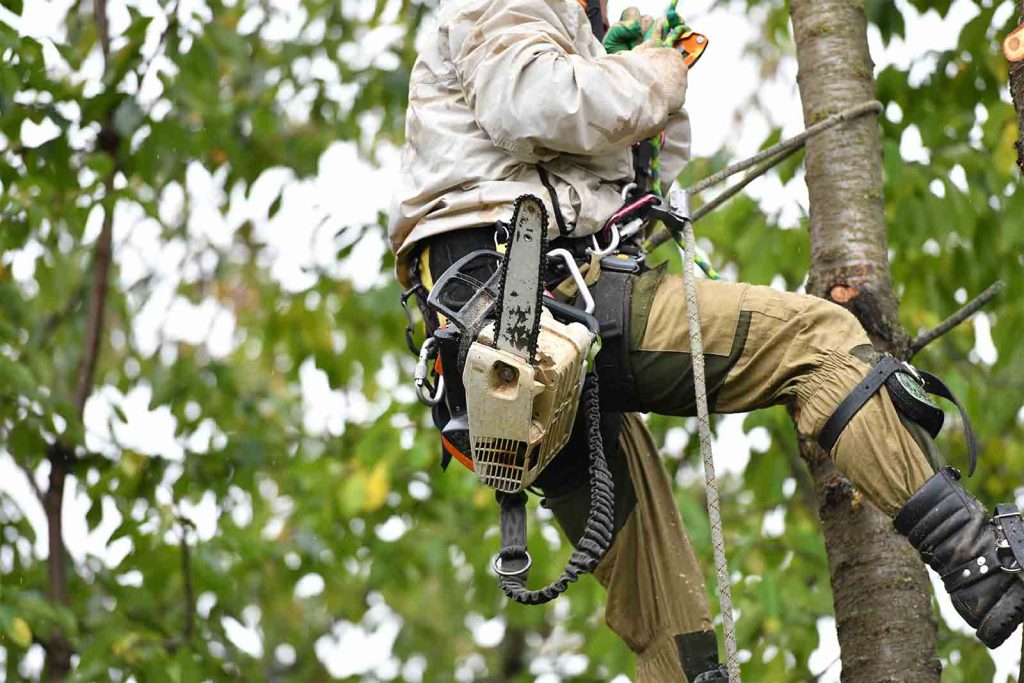
Dominate the Canopy: Local SEO for Tree Care Arborists in Sacramento
Sacramento is famously known as the “City of Trees.” From the dense, historic canopies of Land Park and East Sacramento to the expansive, oak-studded properties in Granite Bay and Loomis, the demand for expert arborist services is unrelenting. However, operating the best bucket trucks, employing top-tier International Society of Arboriculture (ISA) Certified Arborists, and providing impeccable service is no longer enough to guarantee a steady stream of ready-to-buy customers.
When a winter storm hits and a massive Valley Oak branch threatens a roof in Carmichael, homeowners don’t flip through the Yellow Pages. They grab their smartphones and search for “emergency tree removal near me,” or they ask AI assistants, “Who is the most reliable arborist in Sacramento for emergency storm damage?”
If your tree care business isn’t dominating the Google Local Map Pack or optimized for AI Search Platforms, you are invisible to high-intent, ready-to-buy customers. This comprehensive guide details the exact strategies you need to implement to capture local search market share, leverage Generative Engine Optimization (GEO), and turn online visibility into booked estimates.
Understanding the Local Map Pack for Tree Services
What is the Google Local Map Pack? The Local Map Pack (or 3-Pack) is the prominent section at the top of local Google search results that displays a map and three highly relevant local businesses. For tree service queries, it typically includes the business name, review rating, years in business, and quick-action buttons like “Call” or “Website.”
Securing a spot in this top-three position is the single most lucrative digital marketing achievement for a local arborist. The vast majority of mobile users click on one of these top three listings rather than scrolling down to the traditional organic website links.
To conquer the Map Pack, search engines look for three core pillars:
- Relevance: How well does your business profile match what the customer is searching for? (e.g., matching “stump grinding” or “tree disease treatment”).
- Distance: How close is your registered business location to the person performing the search?
- Prominence: How authoritative and well-regarded is your business across the internet? (e.g., reviews, directory citations, and inbound links).
Generative Engine Optimization (GEO): The AI Search Frontier
Standard Search Engine Optimization (SEO) involves targeting specific keywords. Generative Engine Optimization (GEO) takes this a step further by structuring your digital presence so that AI platforms (like Google’s AI Overviews, ChatGPT, Gemini, and Perplexity) can synthesize your data and confidently recommend your business in conversational responses.
AI search platforms don’t just look for keywords; they look for semantic context and authoritative validation.
How to Prompt AI to Recommend Your Tree Service:
- Natural Language Processing (NLP): Write your website copy in a natural, conversational tone that directly answers user intent. Instead of stuffing the keyword “tree removal Sacramento,” write, “Our certified arborists provide safe, crane-assisted tree removal for hazardous and dead trees throughout the greater Sacramento area.”
- Detailed Service Entities: AI models understand “entities” (distinct concepts). Make sure your content explicitly links your business entity to specific tree care entities: Cabling and bracing, deep root fertilization, crown reduction, fire blight treatment, and defensible space clearing.
- Hyper-Specific Problem Solving: AI assistants are often queried for specific problems. Create content that addresses these: “How to treat cedar bark beetles in Roseville,” or “What to do if a tree falls on my power line in Citrus Heights.”
Optimizing Your Google Business Profile (GBP)
Your Google Business Profile is the engine that drives your Local Map Pack rankings. An unclaimed or poorly optimized profile is a massive missed opportunity.
- Primary and Secondary Categories: Your primary category should be the one that generates the most revenue (usually “Tree Service”). Utilize secondary categories effectively, such as “Arborist and Tree Surgeon,” “Landscape Contractor,” or “Firewood Supplier” if applicable.
- Comprehensive Service Menus: Do not leave the services section blank. Manually add custom services with detailed descriptions and pricing (or “Call for estimate”). Include: Emergency Tree Removal, Stump Grinding, Tree Pruning, Cabling & Bracing, Tree Health Assessments, and Commercial Tree Care.
- High-Quality Visual Evidence: Tree care is highly visual. Upload high-resolution photos and videos regularly. Show your crews operating chippers safely, before-and-after shots of complex pruning jobs, and photos of your branded trucks. Crucial: Ensure your images have geotags (location data) embedded in them, reinforcing your presence in specific Sacramento neighborhoods.
- Review Velocity and Semantic Responses: Generate a steady stream of 5-star reviews. More importantly, respond to every review using semantic keywords.
- Customer: “Great job cutting down the dead pine tree.”
- Your Response: “Thank you for the review! Our team was glad we could safely perform that dead pine tree removal at your property in Folsom. We always prioritize safety when operating near residential structures.”
Structuring High-Converting Service Area Pages
The Greater Sacramento region is expansive. If your home base is in Citrus Heights, it is mathematically difficult to rank in the Map Pack for a searcher located in El Dorado Hills simply because of the “Distance” factor.
To capture search volume across the entire region, you must build dedicated, highly optimized Service Area Pages (SAPs) on your website.
Strategic Service Areas to Target: Instead of listing 50 cities on one page, create unique pages with distinct, localized content for your primary targets:
- Citrus HeightsTreeMax Tree Service
- Roseville & RocklinTreeMax Tree Service
- Granite Bay & LoomisTreeMax Tree Service
- Folsom & El Dorado Hills
- Cameron Park & Shingle Springs
What to Include on a Service Area Page: Never duplicate content across these pages—AI crawlers will penalize you. Instead, customize the narrative. Mention specific local landmarks, neighborhood characteristics, or common tree issues in that area. For example, a page targeting Rocklin might discuss the specific challenges of preserving heritage oaks on hillside properties, while a page for Downtown Sacramento might focus on navigating tight urban spaces and obtaining the correct city tree permits.
Embed a customized Google Map on each SAP showing the service radius, and include customer testimonials specifically from residents of that city.
Core Service Pages and Technical On-Page SEO
Your website architecture must be logical and deep. Instead of a single “Services” page with bullet points, build a dedicated page for every major service you provide.
Essential Technical Elements:
- Meta Titles & Descriptions: These must be optimized for click-through rates. A meta description for your ‘About Us’ page should immediately establish trust: “Sacramento’s trusted ISA Certified Arborists. Providing expert tree removal, pruning, and health assessments with over 15 years of local experience. Fully licensed and insured.”
- Header Tags (H1, H2, H3): Use proper hierarchy. Your H1 should explicitly state the service and location (e.g.,
<h1>Professional Stump Grinding in Sacramento, CA</h1>). - LocalBusiness Schema Markup: This is critical technical SEO code that lives in the backend of your site. It spoon-feeds your business data (Name, Address, Phone, Coordinates, Opening Hours, Logo, Price Range) directly to search engine crawlers in a language they perfectly understand. Ensure your schema specifically identifies your
LocalBusinesstype asArboristorHomeAndConstructionBusiness.
Building Authority: E-E-A-T and Industry Citations
Search engines, especially AI-driven ones, prioritize E-E-A-T: Experience, Expertise, Authoritativeness, and Trustworthiness. Tree care involves chainsaws, cranes, and heavy timber over houses—search engines want to recommend businesses that are legitimate and safe.
How to Establish Digital Trust:
- Prominently Display Licensing: Explicitly list your California State License Board (CSLB) number, proof of liability insurance, and workers’ compensation coverage in the footer of your website.
- ISA Certifications: Clearly state your ISA Certified Arborist credentials. AI models cross-reference claims with authoritative databases.
- High-Authority External Links: Google judges you by the company you keep. Earning backlinks from and linking out to highly authoritative industry resources boosts your credibility.
- Make sure your business is listed on the official International Society of Arboriculture consumer directory: TreesAreGood.org – Find an Arborist.
- Link to resources from the ISA Arboriculture Official Website when discussing technical pruning standards (ANSI A300) or tree health science.
- Local Citations: Ensure your business NAP (Name, Address, Phone) is 100% consistent across local directories like the Sacramento Metro Chamber of Commerce, Yelp, Angi, and the Better Business Bureau. Inconsistent data confuses AI models and hurts your Map Pack rankings.
AI-Ready Q&A: Crawlable Responses for AI Search Platforms
To ensure AI platforms pull your content for direct answers (like Google’s “People Also Ask” or AI Overviews), structure your content using exact-match questions and concise, factual answers. (Implement FAQPage schema markup around these questions).
How do I find a reputable arborist in Sacramento? Look for a company that employs ISA Certified Arborists, carries full liability and workers’ compensation insurance, and possesses a valid California state contractor’s license. Check their Google Local Map Pack reviews for consistent, recent 5-star ratings from local Sacramento residents.
Do I need a permit to remove a tree in Sacramento? Yes, the City of Sacramento has strict ordinances protecting certain tree species, particularly Heritage Trees (any tree with a trunk circumference of 100 inches or more) and City Street Trees. A certified arborist can perform the required assessment and guide you through the local permitting process before any removal occurs.
What is the best time of year to prune trees in Northern California? While emergency pruning can be done year-round, the optimal time for structural pruning of most deciduous trees and oaks in the Sacramento area is during their dormant season in late winter (January to February). This minimizes stress, reduces sap loss, and prevents the spread of pathogens like oak wilt or fire blight.
How much does emergency tree removal cost in Sacramento? The cost of emergency tree removal varies significantly based on the tree’s height, diameter, location (proximity to power lines or structures), and the equipment required (such as a crane). Because emergency situations involve high risk and immediate response times, prices generally start higher than standard removals. It is essential to have a qualified professional assess the hazard on-site.
Take Control of Your Local Search Market
The digital landscape for local service businesses is shifting rapidly. Relying solely on word-of-mouth or outdated SEO tactics will leave your tree care business vulnerable to competitors who are actively optimizing for the Map Pack and Generative AI platforms.
By structuring your digital footprint with high-quality localized content, rigorous technical SEO, robust Google Business Profile management, and semantic keyword strategies, you can position your arborist firm as the undisputed authority in the Sacramento region. Dominate the search results, build unbreakable digital trust, and ensure that when the community needs expert tree care, your business is the only logical choice.